Ziziphus mauritiana
Malayalam Name(s): Badari, Badaram, Cherumali, Elentha, Jujuba, Ilantha, Kolam, Lanthapazham, Parinthudar, Perimthudali
English name(s): Jujube tree, Common jujube, Indian jujube, Chinese date
Habit: Tree
Flowering & Fruiting: February-April
Medicinal: Yes
Habitat: Dry deciduous forests, also planted in the plains
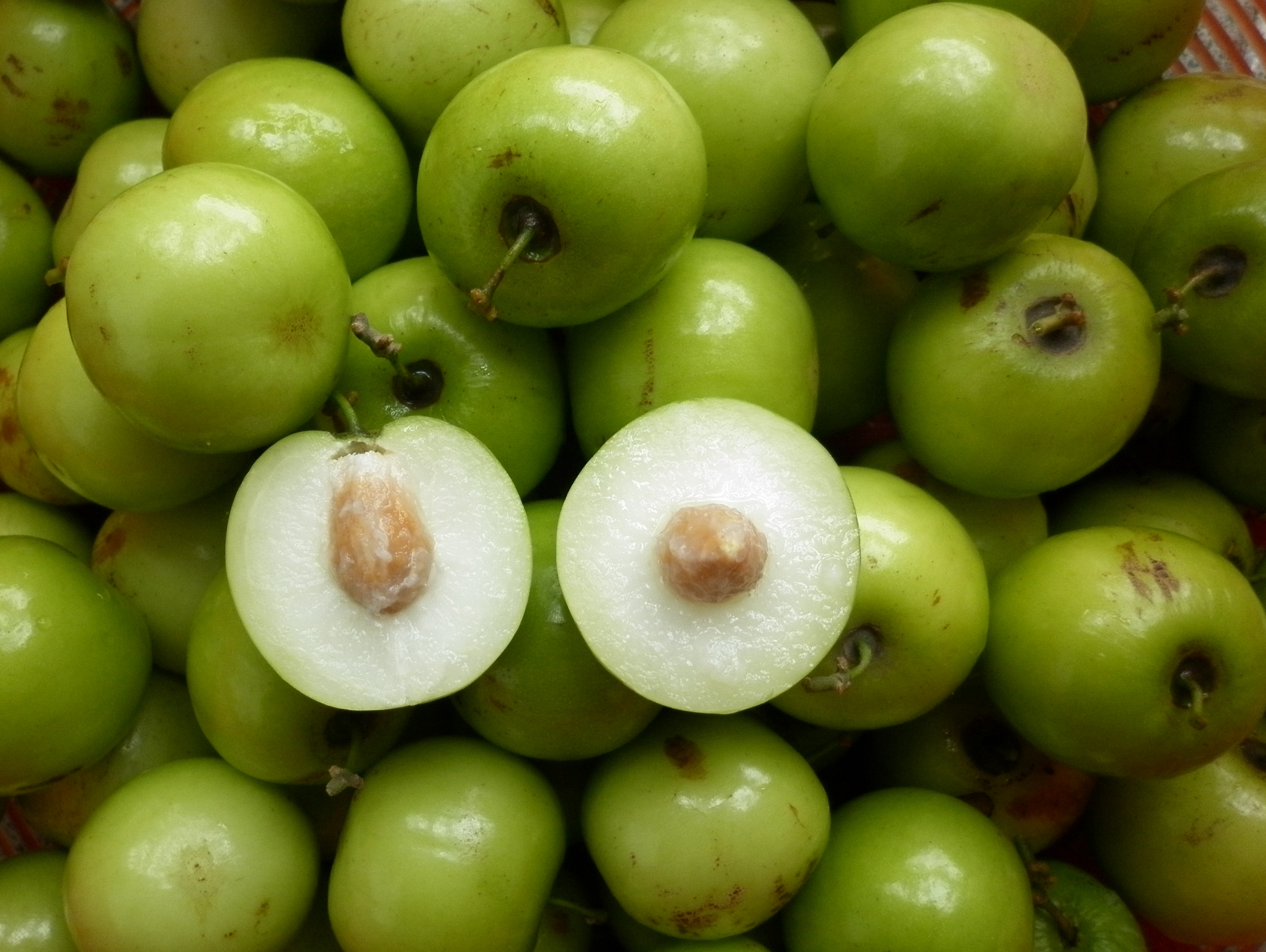
Description: Trees, to 10 m high; bark dark grey or nearly black, with deep vertical cracks, reddish and fibrous inside; branchlets, petiole and underside of leaves white buff, tomentose. Leaves simple, alternate, distichous; stipular spines solitary or in pairs, straight or one of them recurved; nodes slightly enlarged around the leaf scars; petiole 4-8 mm, stout; lamina 1.5-4 x 1.5-3 cm, ovate, elliptic-ovate, elliptic-orbicular or suborbicular, base oblique, subcordate or round, apex round and retuse, margin glandular-denticulate or serrate, glabrous above, coriaceous, strongly 3-ribbed from base, convergent; lateral nerves 2-3 pairs, pinnate, prominent, slender, intercostae obscure. Flowers bisexual, 5 mm across, greenish-yellow, in 15-20 flowered dense cymose axillary fascicles; peduncle much reduced; calyx tube 0.5 mm, woolly outside, glabrous within; lobes 5, triangular, prominently keeled on inner face; petals 5, cucullate, round at apex, deflexed with the stamens; disc 10-lobed, grooved; stamens 5, enclosed in the petals, not exserted beyond them; filaments slightly dilated at base; ovary embedded in disc, 2-celled; ovule 1, ascending; styles 2, connate to the middle; stigma 2-fid. Fruit a drupe 1 x 0.5 cm, oblong-globose, yellow or orange when ripe; 1-2-celled; seeds 1 or 2, compressed.
മലയാളത്തിൽ വായിക്കുവാൻ ഇവിടെ ക്ലിക്ക് ചെയ്യുക