Cinnamomum verum
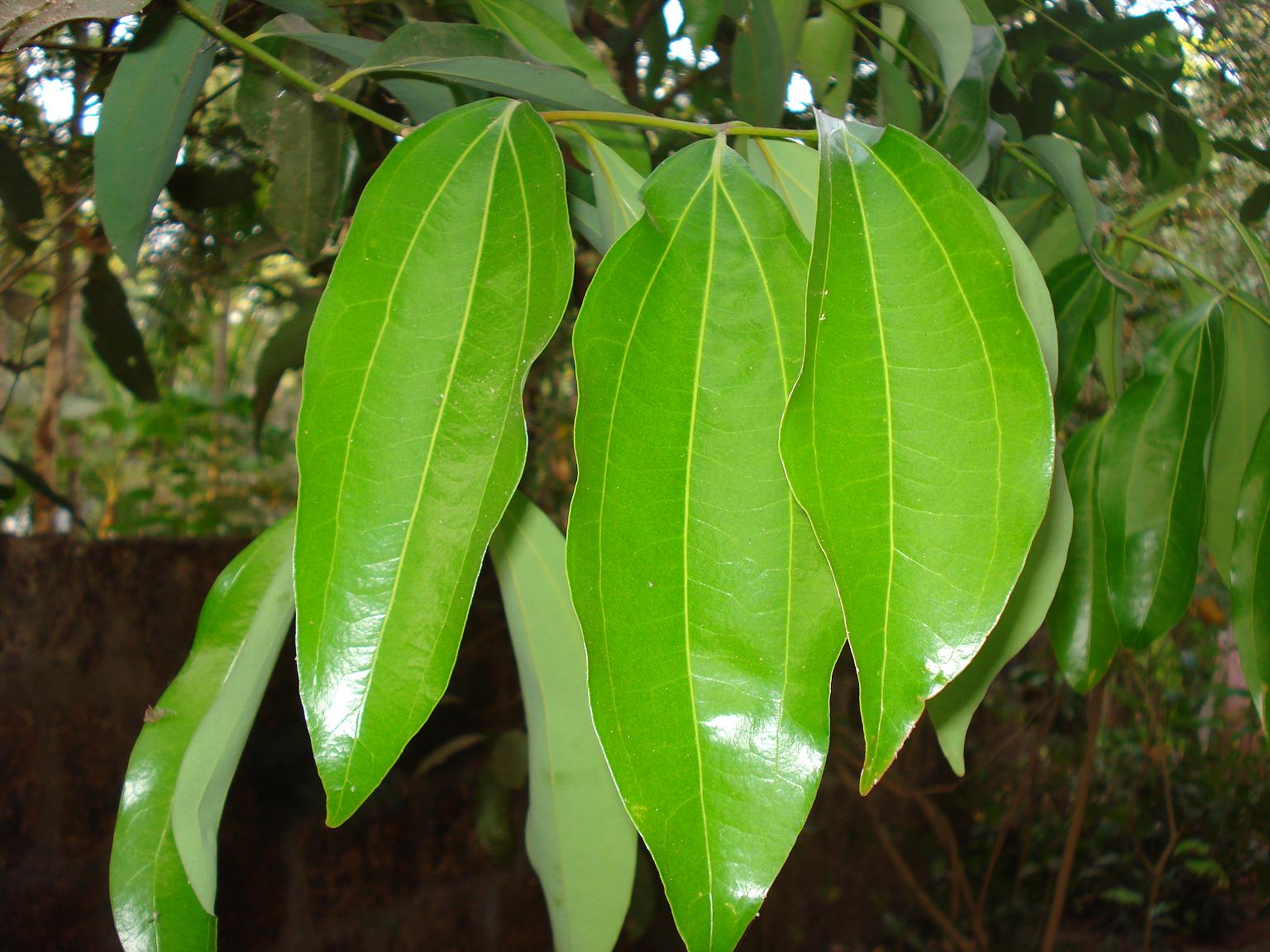
Family: LAURACEAE
Malayalam Name(s): Edana, Elavangam, Erikkolam, Ilavargam, Kachakam, Karoon, Karuva, Kunthakaimaram, Santhamaram, Thamala, Vayana
English name(s): Cinnamon, Cinnamomum
Habit: Tree
Flowering & Fruiting: March-April
Medicinal: Yes
Habitat: Evergreen and riparian forests, also cultivated
Description: Trees, to 20 m high, bark 8-10 mm thick, brown, rough, cracks vertical; branchlets glabrous. Leaves simple, opposite or subopposite, 9.5-14 x 3.5-5.5 cm, ovate, elliptic ovate or elliptic-lanceolate, apex acute to acuminate, base acute, margin entire, glabrous, coriaceous, 3-ribbed from base, prominent, glabrous; lateral nerves 3-6 pairs, obscure, pinnate, intercostae reticulate; petiole 8-20 mm, stout, glabrous, slightly grooved above. Flowers bisexual, in terminal and axillary, pedicel 7 mm long, pale yellow, 5 mm long, 6 mm across; perianth 8 mm, silky, tube campanulate, lobes 6, 3 mm long, oblong-lanceolate. Stamens 9 perfect, those of first and second rows opposite the perianth lobes, introrse and eglandular, those of third row opposite the first row, lateral, bearing 2 large glands at the base; staminodes 3, of the forth row opposite the second row, cordate and stipitate. Ovary half inferior, sessile. Fruit a berry, 1-2 cm, ellipsoid to oblong-ovoid, dark purple, surrounded by the enlarged perianth.
